
What a Skipped Fall Checkup Actually Costs You
Put this off until January and you're not looking at a quick fix anymore. A door that's never been lubricated or balanced before the cold hits will often freeze to the garage floor overnight, strain against ice-stiffened springs every time it opens, and eventually leave you stranded with a door that won't move at all, usually on the coldest morning of the year, right when you need to get to work. The parts that fail in deep cold rarely fail quietly. A spring that's been fighting corrosion and temperature swings all season can snap suddenly under load, and a cracked panel from a door that was forced open while frozen to the slab isn't a cheap patch. An hour of prep now is a lot less than an emergency call and a replacement part in February.
How Cold Actually Changes the Way Your Door Behaves
Steel contracts in the cold, and so does the grease inside your door's moving parts. Metal rollers and hinges that moved smoothly in August can bind up once temperatures drop into the teens and single digits. Torsion springs lose some of their flexibility in extreme cold too, so the door feels heavier than it should, and the opener motor has to work harder to compensate. If you've noticed your door moving slower than usual, or the opener straining and groaning more than it used to, that's often the first sign the system isn't ready for winter loads.
Rubber parts suffer the most. The weatherstripping along the bottom of the door and the seals around the frame get brittle and crack when they repeatedly freeze and thaw. Once that seal fails, cold air pours into the garage, which matters a lot if you've got pipes, a water heater, or a freezer out there. It also lets in moisture, which just accelerates rust on the hardware you're trying to protect.
The Salt and Ice Problem
Every car that pulls into the garage through a Huntley-area winter is tracking in road salt and melting snow, and a lot of that ends up on the tracks and at the base of the door. Salt residue is corrosive, and it collects right where your rollers ride and where the bottom seal makes contact. Left alone, it eats away at track finish and hardware over a season or two, and it can cause the door to bind or run unevenly in its tracks.
A simple habit helps more than people expect: wipe down the tracks and the bottom few inches of the door with a damp cloth every few weeks through winter, and rinse off visible salt buildup when you get a chance. It's a five-minute job that keeps corrosion from taking hold before spring.
Your Pre-Winter Checklist
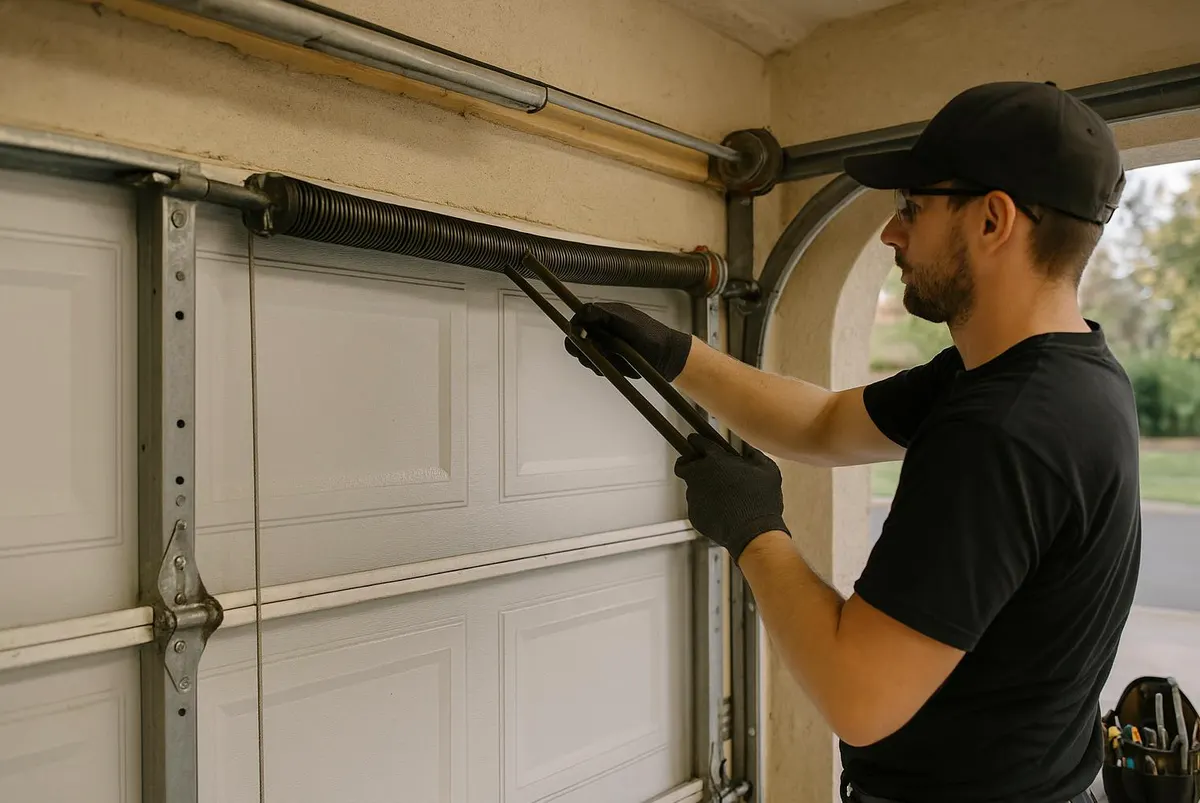
- Lubricate the moving parts. Rollers, hinges, and the torsion spring itself need a silicone-based or garage-door-specific lubricant, not household oil or WD-40, which can attract dirt and wash out too fast. This is the single most effective thing you can do before cold weather arrives.
- Check the weatherstripping. Run your hand along the bottom seal and the side seals. If it's cracked, flattened, or pulling away from the door, replace it now rather than mid-winter when a gap is already letting in cold air and moisture.
- Test the balance. Disconnect the opener, lift the door halfway by hand, and let go. It should stay roughly in place. If it drops or shoots up, the springs are out of balance and working harder than they should, which matters more once cold weather adds extra strain.
- Tighten the hardware. Seasonal temperature swings loosen bolts, brackets, and hinges over time. A quick pass with a wrench on visible hardware catches problems before they turn into rattling, misalignment, or a track pulling away from the wall.
- Check the opener's battery backup. Power outages are more common during winter storms, and a backup battery that's never been tested is a gamble. Confirm it still holds a charge before you actually need it.
- Realign the safety sensors. Cold weather causes more contraction and settling than people expect. If the sensors at the base of the track are even slightly out of alignment, the door may refuse to close, often at the worst possible moment.
Signs You Waited Too Long
If the door is already struggling, you'll usually hear it before you see it. A grinding or squealing sound on the way up, a door that reverses without explanation, or visible rust forming on the springs or tracks are all signs the system is past the point of simple maintenance. A door that's frozen to the garage floor and gets forced open anyway can bend the bottom panel or strip the opener's gears, turning a seasonal tune-up into a repair bill.
When to Call Huntley Garage Door Co
If your door is sluggish, noisy, or out of balance, or you just want it checked before winter really sets in, our garage door maintenance service covers the lubrication, hardware inspection, and balance testing that keeps a door running through the cold months. If a spring is already showing wear or has lost tension, our garage door spring replacement service handles that safely before it becomes an emergency call on a sub-zero morning.
If you're in Huntley, Lake in the Hills, Algonquin, Crystal Lake, Woodstock, Gilberts, Carpentersville, or Hampshire and want your garage door ready before the next cold snap, give Huntley Garage Door Co a call. We'd rather get you on the schedule now than on an emergency run in January.